Philosophy
Training the Dog in Front of Me
Why the plan matters less than the dog in front of me.
Having a training framework keeps me honest. It tells me what I'm trying to teach, why I'm teaching it, and what principles I should be following. Without one I'd probably jump from method to method, copy drills I saw online without really understanding them, and confuse being busy with making progress.
The catch is that a framework isn't a script. Gunner has no idea what my plan says. All he knows is what's happening to him right now, and that changes constantly: how motivated he is, how confident, how amped up, how tired or hungry, what's going on around us, and how well he actually understands what I'm asking. Something that worked great yesterday might fall flat today. Something that works for another trainer's dog might be completely wrong for mine.
So the skill I keep coming back to is watching him. Before I ask for anything, I try to look first. Is he with me? Does he get it? Is he confused, distracted, frustrated, tired, or just not that into what I'm offering? Am I asking for too much, or moving too fast? And the one I have to be honest with myself about: am I repeating this because he needs another rep, or because I don't know what else to do?
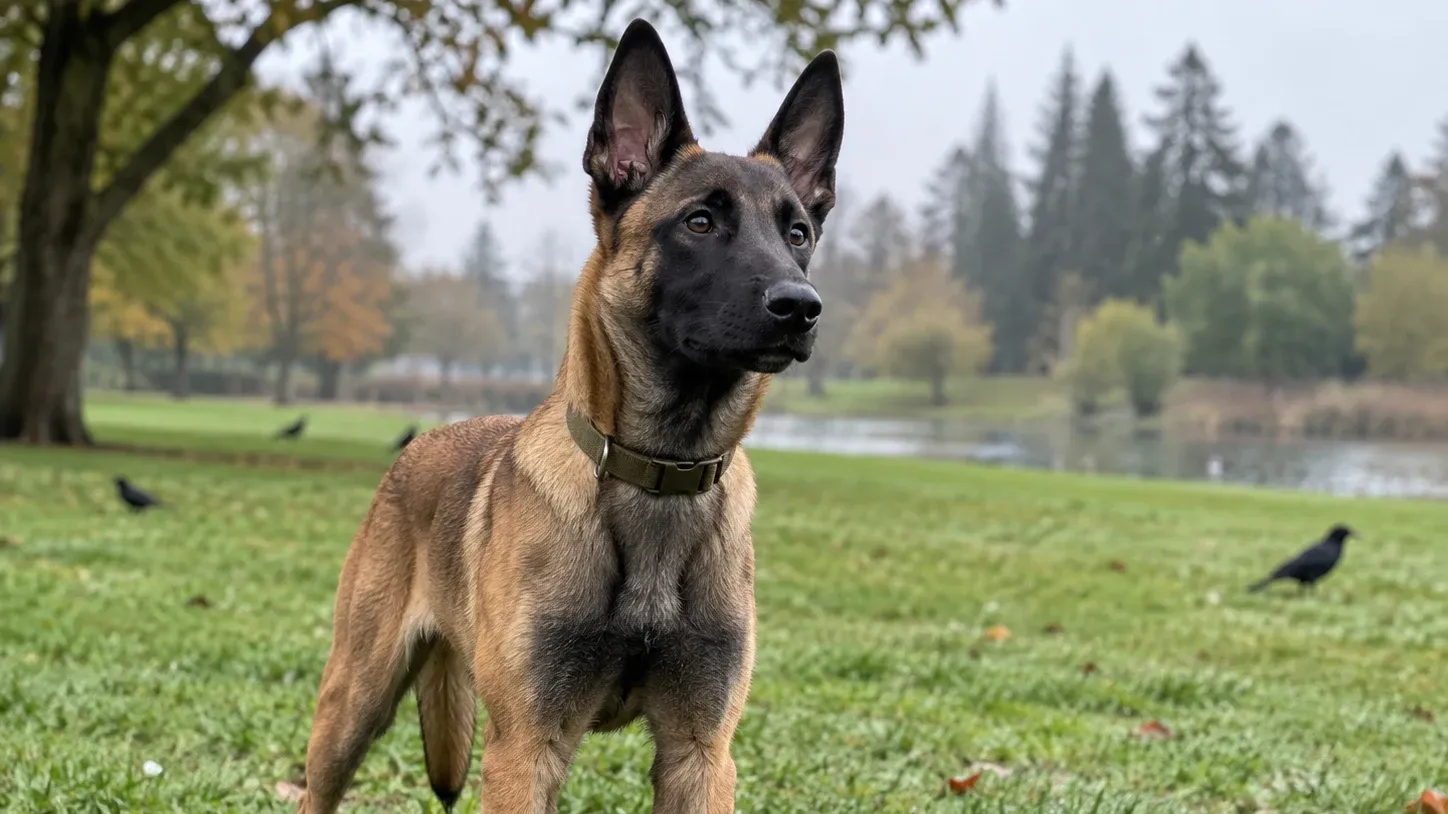
A few days ago I took Gunner to the park early in the morning to work on focused heeling and recall. The whole idea was to beat the people and have the place to ourselves. What I didn't think about was that the bunnies, squirrels, and crows had the same idea. It had rained the night before, so there were birds all over the grass digging for grubs and worms. I'd picked the spot because it was quiet for me, not because it was quiet for him. His prey drive kicked in, and nothing I had in my pocket could compete with that.
So I scrapped the plan. We walked home, and the whole way back we worked on him disengaging from the animals and turning back to me. It wasn't what I set out to do that morning, and it was a lot harder than I expected, but it was probably the work he actually needed.
Watching him doesn't mean I throw out the plan every time things get hard. It means I use the plan to make sense of what I'm seeing and then adjust. Usually that's one of a few things: make it easier, find a quieter spot, pay him better, break the behavior into smaller pieces, or be clearer about what I want. Sometimes the right call is to quit for the day and try again later.
That's why this is harder than learning techniques. I can know the terms, read the learning theory, watch great trainers, and write detailed plans, and still miss what my dog is telling me. Knowledge, timing, and mechanics all matter, but none of them help much if I'm not paying attention.
With Gunner, I'm not trying to push him through a checklist as fast as possible. I want a dog who understands the work, enjoys doing it with me, and gets more confident as we go. That means training the dog in front of me today, not the one I pictured or the one I saw on someone's YouTube channel.
The framework mostly stays the same. How I use it depends on the dog. Knowing when to adjust, and when to stick with the plan, is probably a big part of what being a handler actually is.