It starts with watching the dog.
This is what I believe about training right now. Most of it came from people who know a lot more than I do. The rest came from Gunner, usually halfway through a session that wasn’t going the way I planned. Expect it to change as he does.
Read the principles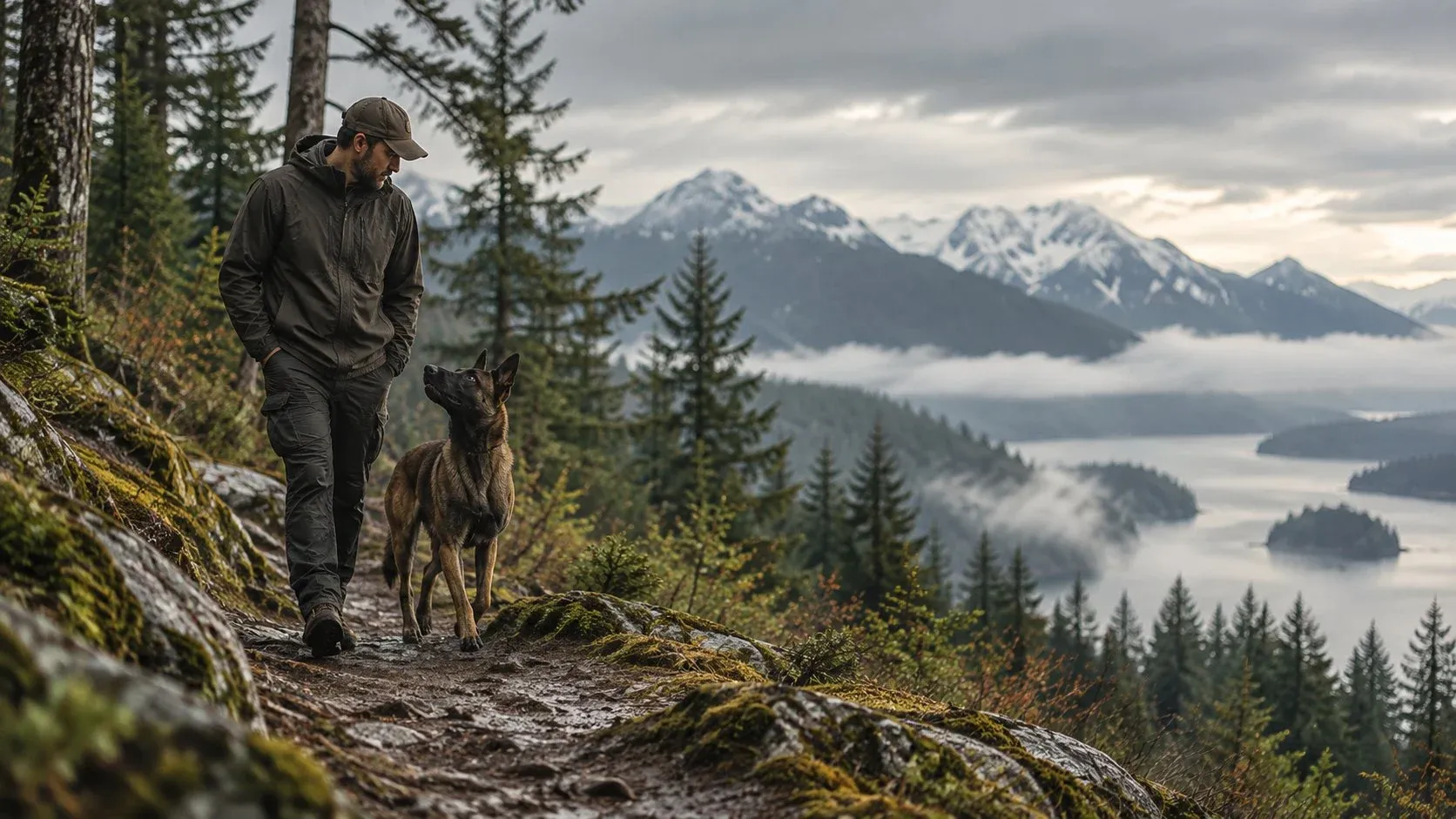
There are two students in every session.
Gunner is learning behavior. I’m learning how to teach it. When a session goes sideways I check my end of the leash first: my timing, my criteria, and whether the reward was worth anything in that spot.
- Behaviors and cues
- What earns reinforcement
- Boundaries
- Emotional regulation
- Confidence in new places
- How to work with this person
- Timing and mechanics
- How to use reinforcement well
- Pressure and release
- Emotional regulation
- Reading the environment
- Session design, and when to change it
Gunner isn’t the only one being trained.
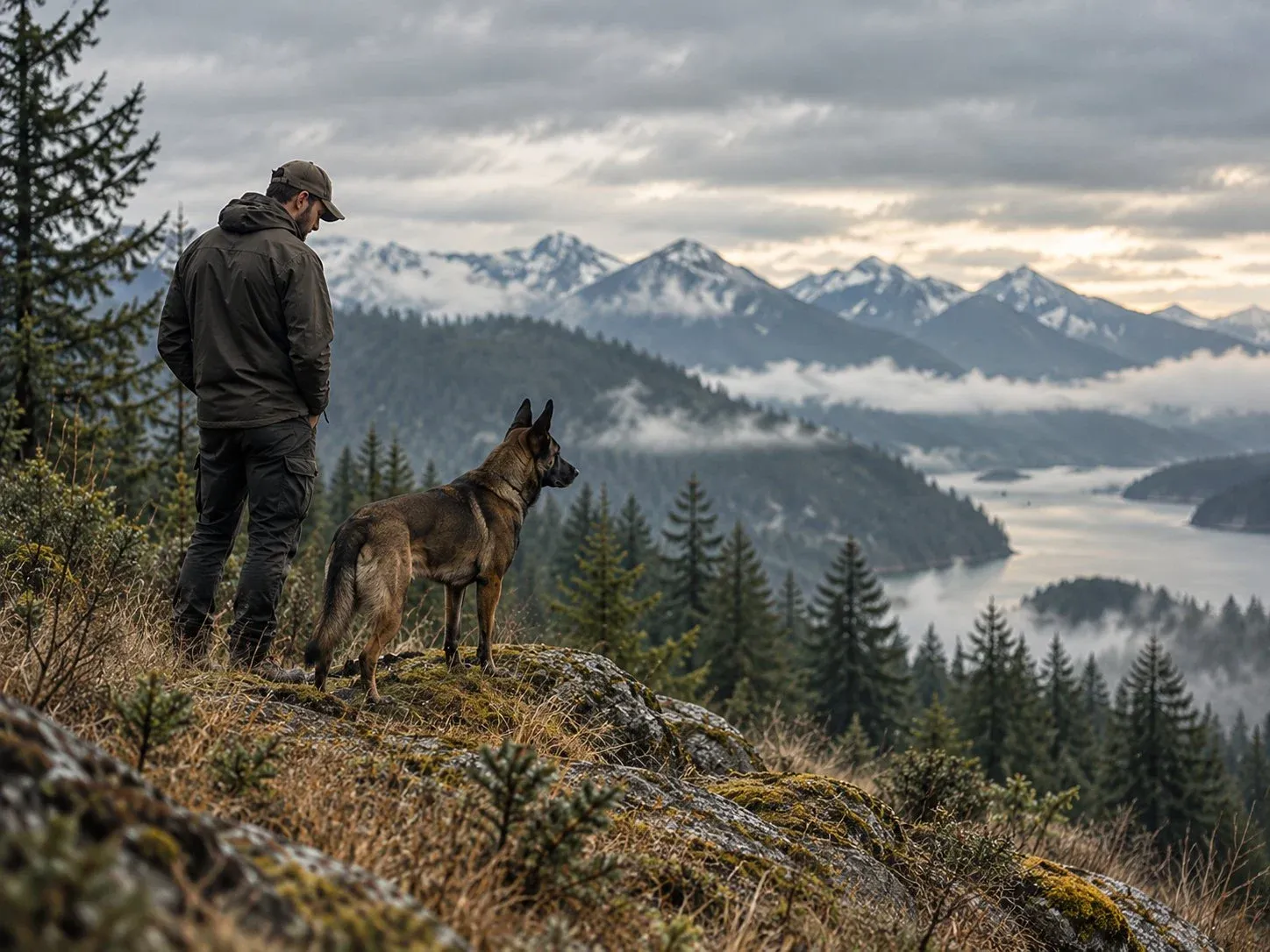
Look first.
Train second.
Before I add anything to a session, I try to answer these.
- 01Is he engaged with me, or with everything else?
- 02Does he understand what I’m asking, or is he guessing?
- 03Is this place too hard for where he is right now?
- 04Is the reward worth the effort here?
- 05Is he frustrated, over his head, tired, or bored?
- 06Am I repeating this because he needs another rep, or because I don’t know what else to do?
That last one is the question I least like answering. It’s usually the one that matters.
Learn the principle. Adapt the method.
A framework gives me somewhere to start. The dog tells me where to go next.
I read and watch a lot of trainers: Michael Ellis, Ivan Balabanov, Nate Schoemer, Pamela Reid, and plenty of others. I borrow from all of them. I’m not trying to join a camp.
What I’m after is understanding why an exercise works, well enough to change it when the plan stops matching the dog. An exercise fits one situation. A principle still holds when the situation changes.
Methods are general. Dogs are specific.
What works depends on temperament and genetics, his age, what’s been reinforced before, how amped up he is, and where we happen to be. Gunner in the backyard and Gunner at the park after rain are not the same dog.
I don’t keep a list of banned tools. When I reach for one, I want to know what it’s doing to him and why I picked it.
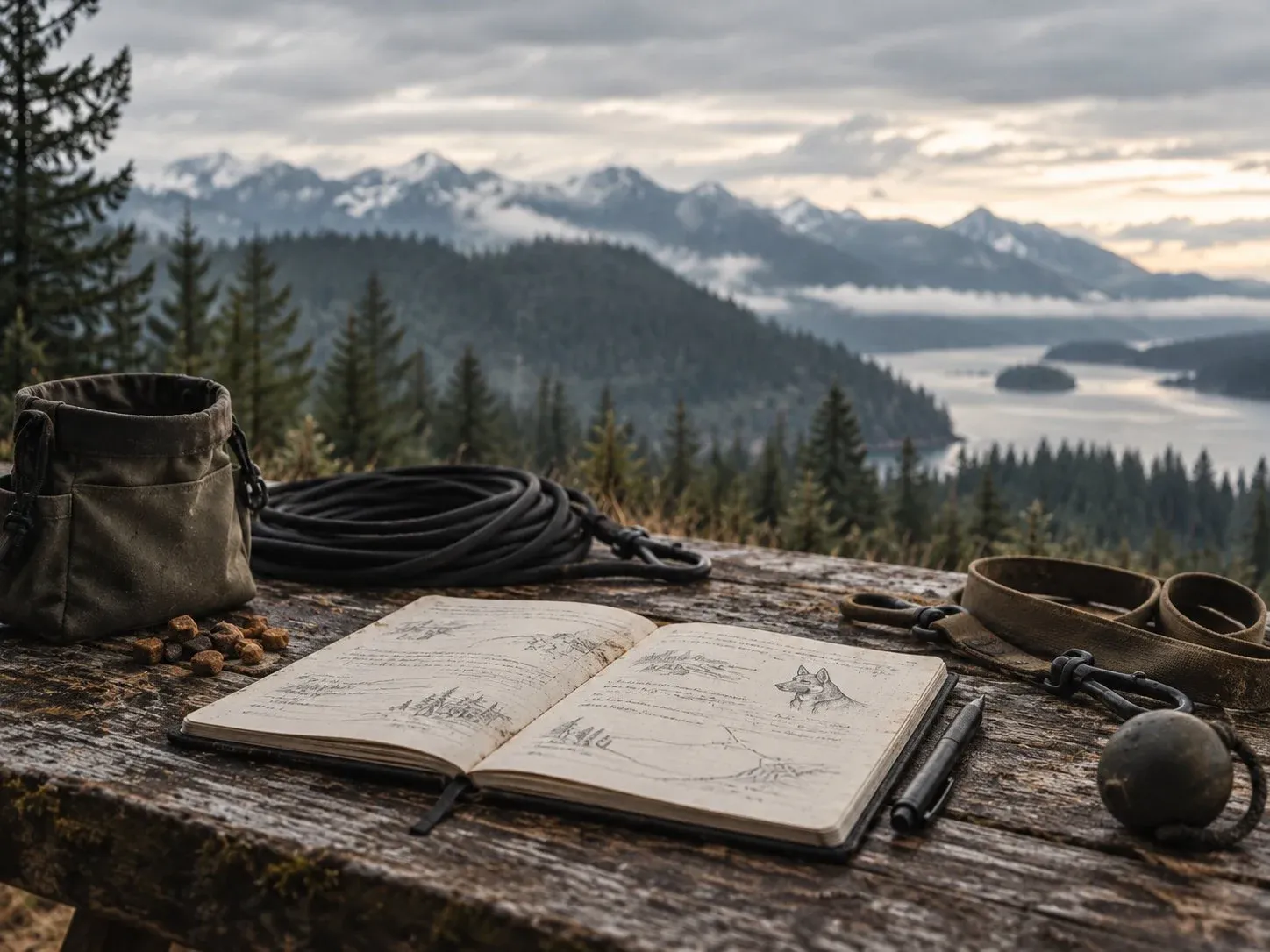
Clarity before complexity.
Before I decide Gunner ignored a cue, I have to ask whether I ever made it clear. Markers, cues, rewards, pressure, release, my own body. All of it tells him something, whether I meant it to or not.
- Cue
What I ask for.
- Behavior
What he offers.
- Marker
The moment it was right.
- Reward / release
What it was worth, and when it’s over.
↺ What he learns carries into the next rep
- A cue means one thing.
- A marker means one thing, and it always pays.
- A release ends the behavior every time, not most of the time.
- Consequences are predictable enough that he can work out how to earn them.
Discipline here means follow-through and consistency. It has nothing to do with being harsh. His cues are in French, and the whole marker and cue system lives in Field Notes.
See the cue systemSomewhere between bored and overwhelmed.
I want a dog who wants to work, more than one who has learned what happens if he doesn’t. That depends on the challenge matching what he can do today.
Too easy and he checks out. Too hard and he gets frustrated or stressed, or goes looking for his own fun. The zone moves as he gets better, so finding it again is part of every session.
Checking out. Sniffing the grass. Going through the motions.
The challenge means something, he understands enough to try, and effort pays off.
Confusion, frustration, stress. Making his own fun.
→ The zone shifts as his skill grows
Challenge enough to engage. Support enough to succeed.
Read: Flow in the journalBuild the dog you have.
Gunner is young. Right now I care more about engagement, recall, confidence in new places, and him learning how to learn than I do about a pretty heel.
A lot of what shows up online is the finished picture. The foundation under it doesn’t film well, and it’s where most of the time goes.
Titles and sport are good goals, and I’d like to try IGP-style work with him someday. What I care about more is a capable, confident dog with real outlets for what he was bred to do, like scent work and shed hunting, who also fits into a house with little kids. Training should make his life bigger.
I’d rather build understanding slowly than get a good-looking behavior fast.
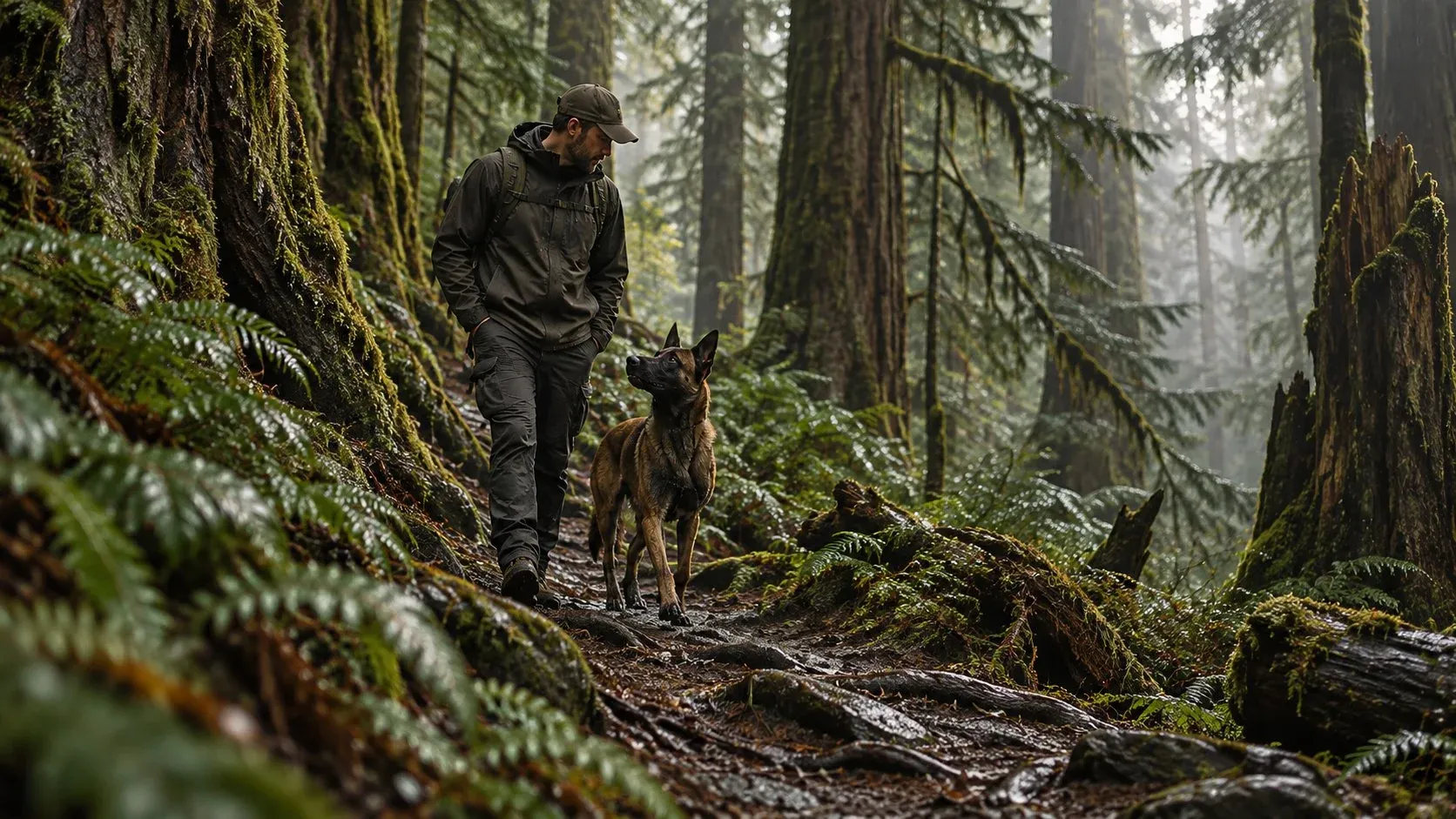
- Engagement and focusIn progress
- Recall around distractionsSolid
- Calm in new placesIn progress
- Position work (center, through the legs)In progress
- Polished obedienceLater
Knowing is not doing.
I can explain reinforcement timing at the kitchen table. Doing it with a spun-up Malinois at the park while someone’s watching is a different skill. The only way I know to close that gap is reps done on purpose, and an honest look at how they went.
So the bad sessions stay in the record. A five-minute session that teaches me something is worth more than a clean one that doesn’t.
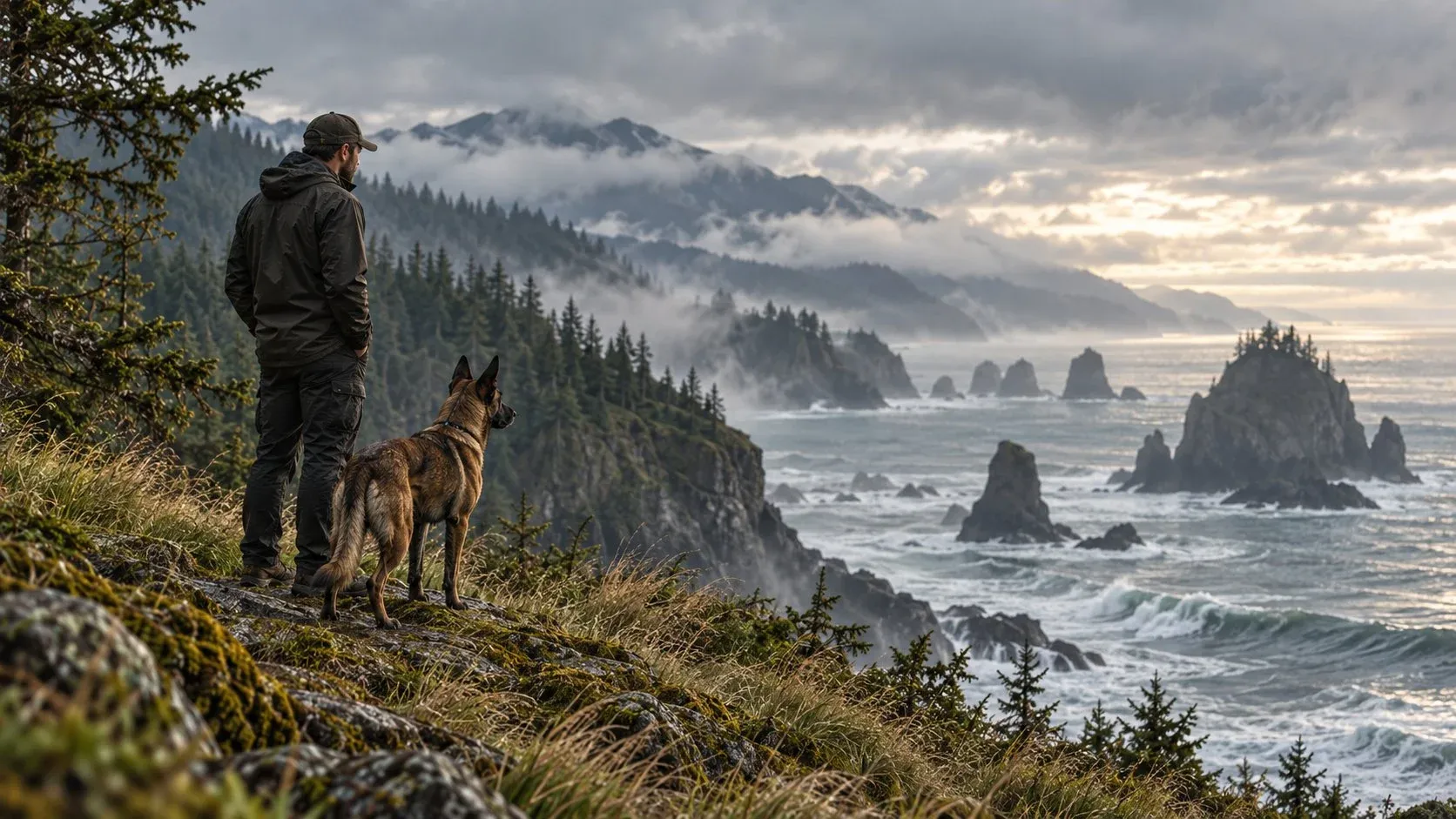
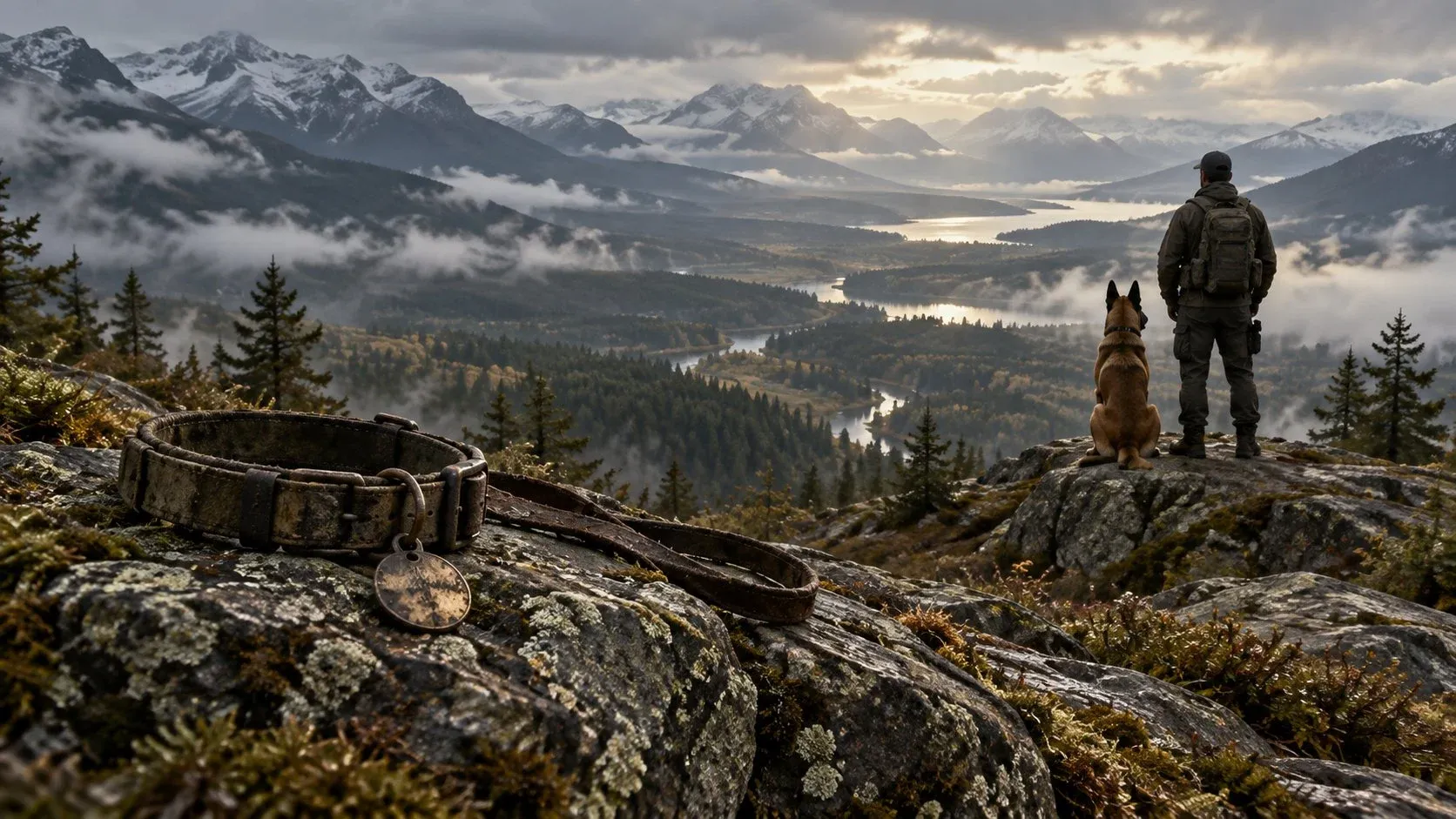
Training happens inside a relationship.
Charlie was our Australian Shepherd. He used to howl along with the fire sirens in town, trying to match the pitch. We lost him in the summer of 2026, and Gunner came home not long after.
Charlie is the reason I take this seriously. You get less time with them than you think, and I want to spend Gunner’s getting good enough to help him become the dog he can be.
The bond matters, but it won’t train him on its own. Structure and a lot of shared work are what let it hold up under pressure.
Gunner didn’t replace Charlie. He picks up where Charlie left off.
Read about CharlieIf the whole page had to fit on an index card in the treat pouch, it would say this.
- 01Watch the dog before changing anything.
- 02Make it clear before making it hard.
- 03Pay with something he actually wants.
- 04Change the plan when he tells me to.
- 05Write down what happened, especially the bad ones.
- 06Don’t let the system matter more than the dog.
Train the dog.
Build the handler.